
This is the 4th article in my Eating Disorder Recovery Q&A blog series! In case you missed the first 3, I’ll link them below:
Eating disorder recovery Q&A: How do I stay hopeful in recovery? Is full recovery even possible? Eating disorder recovery Q&A: How do I stay committed to recovery? What do I do when I’m triggered? Eating disorder recovery Q&A: Intuitive Eating in postpartum and for digestion concerns
I’m excited to answer these next two questions, I have a lot to say about them! Let’s get to it.
Question 1: “I think I am grieving all that diet culture stole from my past. Is that normal?”
Absolutely normal. When we realize the months, years or decades we gave to preoccupation with food rules, we also realize all we may have missed out on during that time. You could have been thinking about, doing or connecting with a lot of other (more important) things, and this results in a very real sense of loss.
It’s also common to grieve what you thought would happen if you stuck perfectly to your food rules. If a diet isn’t your answer, you may also feel like you won’t ever be happy or confident or have good relationships or be happy in your job… etc. We give weight loss way too much credit for being the answer to our problems, so when you leave diet culture behind, you could also grieve the empty promises it gave you.
My advice is to let yourself grieve it. Part of leaving food rules and disordered eating in the past is full recognition of the harm it’s caused you. This can help you be resolute in your decision to never go back.
Also, make a list of things you want for yourself, and pursue those things. Quit giving weight loss or “perfect” eating any credit for your happiness or peace.
Overall, it’s important for you to know that you will become a Confident Eater not in spite of your past experiences with food, but because of them. Your past isn’t for nothing. It has a lot to teach you, and when you embrace ALL your experiences with food, exercise and body image, you are far more likely to build a healthy, supportive and peaceful relationship with them.
So, as you grieve, make a list of all you’ve learned about yourself. Most importantly, take time to consider what you want moving forward. Dream big! Being in a peaceful relationship with food and your body is absolutely possible.
Question 2: “How do I learn to love exercise? I’m on really bad terms with it right now.”
In my experience, it’s common for healing your relationship with exercise to be even more difficult than healing your relationship with food. It can be hard to neutralize exercise and disentangle it from weight or body shape, especially if you’ve never had experience with exercise outside of using it for weight loss or as an accompaniment to a diet plan. When exercise is used as punishment, it’s hard to love it.
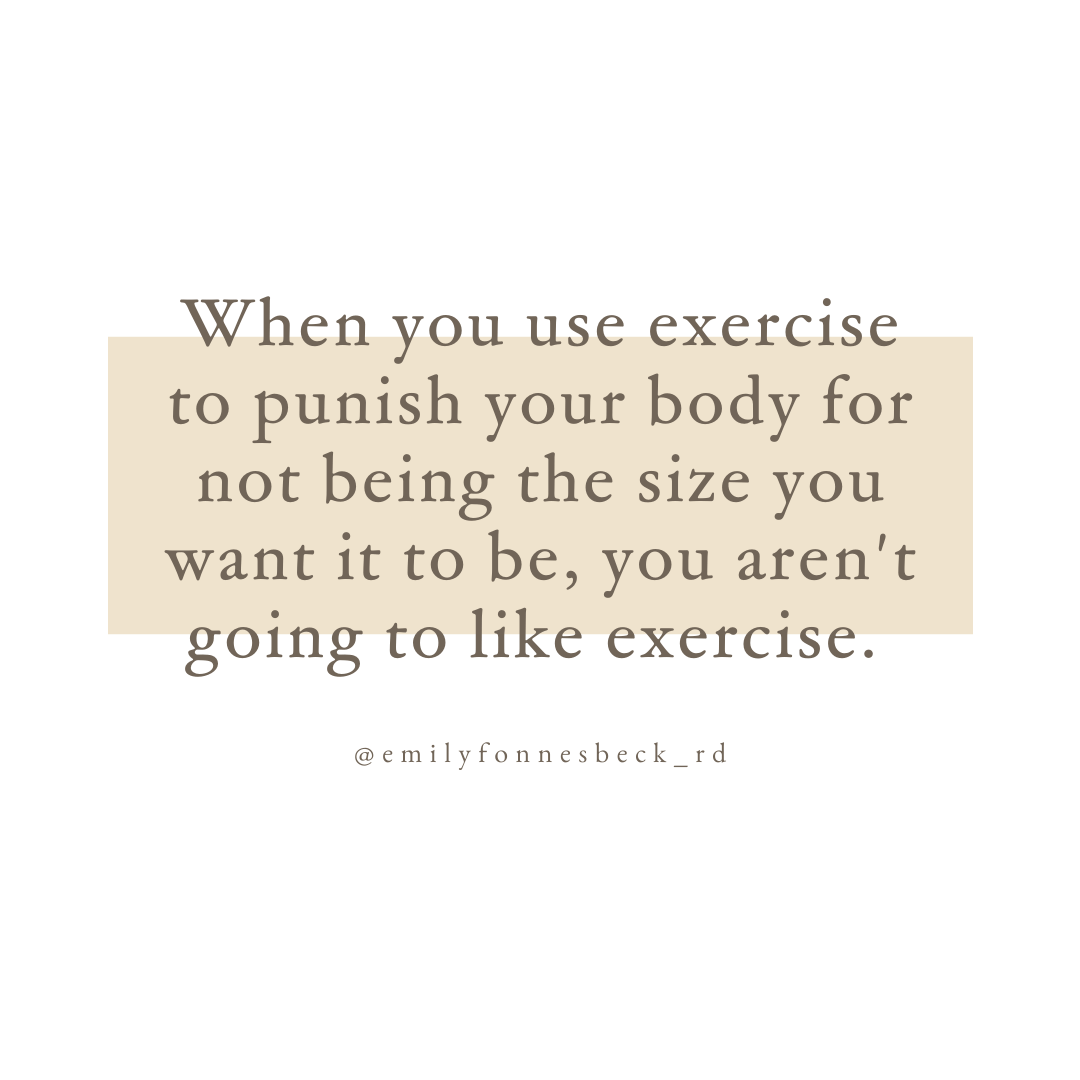
That’s unfortunate because exercise is actually a really great tool for improving connection with your body, among other health promoting benefits.
I want to make sure to say that it’s often necessary for people who have struggled with a dysfunctional relationship with exercise to take a complete break from exercise completely. That break could be weeks, months or years depending on the person. Personally I took 3 years off of any formal exercise and it was the best thing I did for myself.
But if you’re ready to jump back into exercise, here are the first 2 steps for doing so:
- Identify your positive intentions for exercise.
Historically your intentions for exercise may have been about manipulating your body size or shape. So what would be more positive, healthy and supportive intentions? Make a list of why you want to exercise.
Some examples might be:
- Improved mood
- More energy
- Better joint health
- Better posture/less pain
- Improved heart health
- Better blood sugar management
- Feeling stronger
- Better sleep
- Better balance or flexibility
- A fun outlet each day
- A way to connect with friends
None of these are dependent on changes in body size, only dependent on consistency with moving your body in a way you enjoy.
Identifying your positive intentions can serve two purposes, First, it can help you move away from the intention of using exercise for weight loss, or add perspective when your mind wants to go there. Second, it may help you identify the type of exercise you would want to use. For example, if improved flexibility or range of motion is an intention, than stretching or yoga could be a good use of your time.
Also, if you are exercising to manipulate your body, I guarantee you won’t notice better sleep, feeling strong, more energy, improved mood, etc. So, if you aren’t getting out of exercise what you were hoping to get out of it, that can be a red flag that you’ve reverted to old intentions, thought patterns and habits, and that you need to take a step back and revisit how you’re approaching exercise.
2. Make a list of types of physical activity you enjoy.
I would then encourage you to make a list of the types of physical activities you enjoy. Like, actually enjoy… not just things you think you “should” do. Think outside the box, and try to list a few so you can have options and variety. Clearly if you really just like to walk (for example), do that! But having other options can prevent repetitive use injuries, act as backups when your first choice isn’t an option, and provide more well rounded fitness.
From there, get started! Be flexible, ease into it, listen to your body and take rest days and use modifications as needed. Pull back if you feel it start becoming compulsive or you are feeling guilty for missing day(s). Let it be loose and enjoyable and be aware of when it doesn’t feel that way anymore. If you’re noticing guilt or worry about exercise, take a break for a few days to reconnect with intentions, trouble shoot, assess where things took a wrong turn and then get back into it.
The best way to heal your relationship with exercise is to move, and then notice what comes up. Let your healing be a process, staying mindfully aware of your intentions and connected to your body.
I hope this has been helpful! If you have any questions you’d like me to answer in upcoming eating disorder recovery Q&As, feel free to leave a comment! Stay tuned for more to come.