
This is the 2nd article in my Eating Disorder Recovery Q&A blog series. In case you missed the first one, I’ll link it below:
Eating disorder recovery Q&A: How do I stay hopeful in recovery? Is full recovery even possible?
Let’s dive right into the next 2 questions!
Question 1: “Do you still get triggered by certain things even if you’re recovered?”
Absolutely. You’ll likely find that as you get further along in your healing process, you’ll be triggered far less frequently or intensely. However, that doesn’t mean that you won’t have experiences, conversations or situations that trigger you.
In fact, it’s important not to base the quality of your recovery on the thoughts or feelings you have about food, your body or yourself. Instead, what we aim to do in recovery is develop something called psychological flexibility, or the ability to be “triggered” and not have that mean you slip back into eating disorder behaviors.
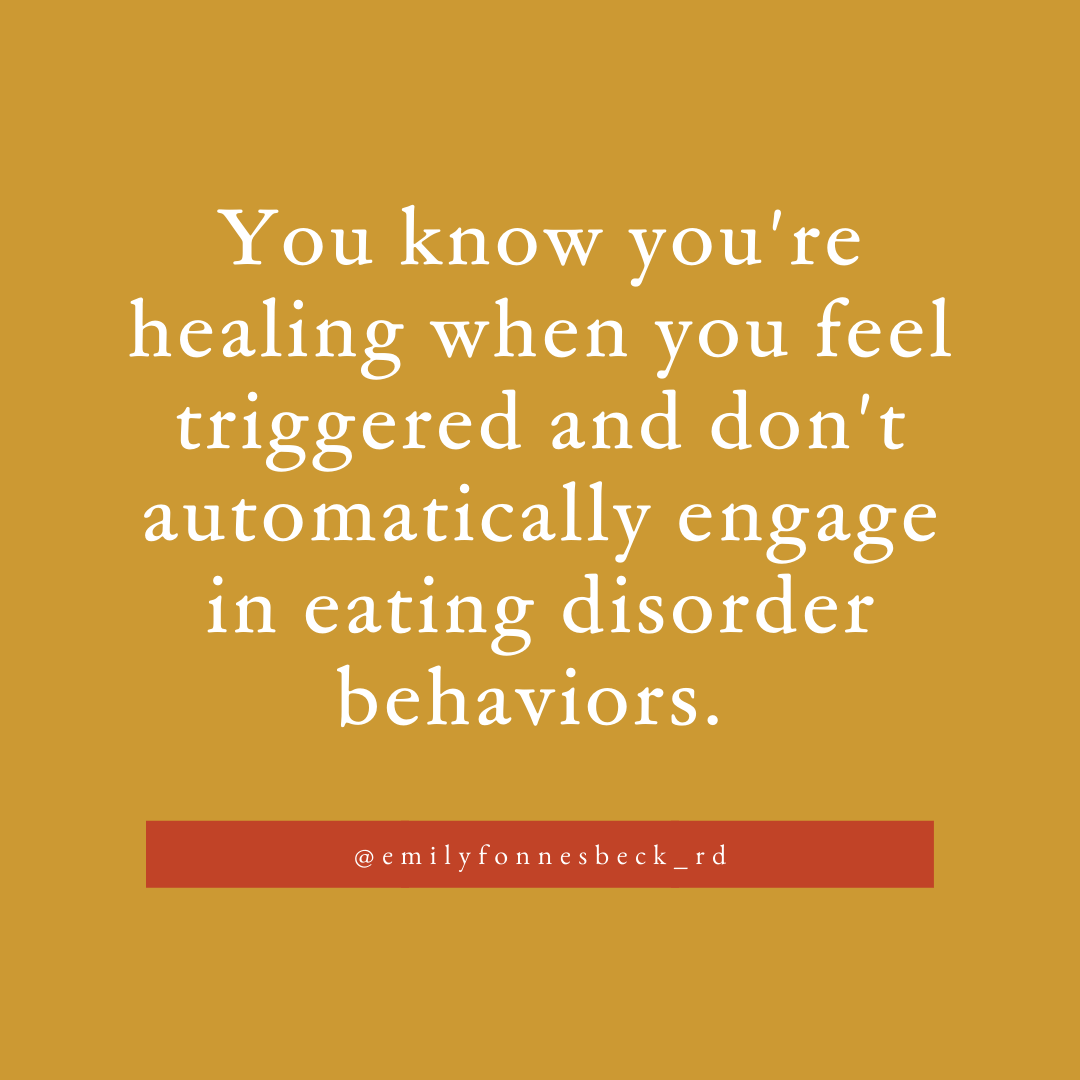
For example, when you’re deep in your eating disorder, something like seeing your weight, having a friend talk about their diet, or hearing your mom make negative comments about her body would likely automatically result in using ED behaviors.
Once further along in recovery, or when fully recovered, you may see your weight, hear a friend talk about their diet, or overhear your mom speaking negatively about her body… and those things may still bother you. BUT, instead of those experiences automatically resulting in ED behaviors, you intentionally choose to honor and respect your body and maintain positive self-talk. You show up for yourself and stay in the driver’s seat, instead of letting your ED take over.
While we all want to avoid triggering situations as much as possible, that’s not completely realistic. Instead we want to develop the ability to respond to that trigger in healthy and supportive ways. Therefore, the real win isn’t never being triggered, it’s being able to support yourself (and/or reach out for support) to get through it.
Question 2: “What keeps you on track to keep choosing recovery? I’m a new mom and have fallen back.”
My heart goes out to you! My own eating disorder started as a new mom. It’s a HUGE transition that can take a toll on our mental and emotional health. For myself, so much of my life felt out of control and unpredictable, and an eating disorder became a way to try to cope. I share that in case it resonates, and hopefully helps you feel less alone.
The truth is that any life transition puts you at an increased risk of develop or relapsing into an eating disorder. Entering high school, going away to college, starting a new job, getting married, going through a divorce, changing careers, getting pregnant, having a baby, adoption a baby, losing a child, moving to a new city, the death of a loved one, and so on. Those transitions mean a lot of change and unknowns, and it’s a vulnerable time for anyone. It’s common to look for a way to cope, and food and your body are easy targets.
To answer your question, I’d say the primary way to continue to choose recovery during these life transitions is to first recognize it as a vulnerable time and get the proper help and support. Don’t be afraid to ask for help with your recovery, or any other area of your life.
Second, don’t reinvent the wheel. What has helped you before in making progress in recovery? Revisit the things that have helped you in the past and recommit to them. New challenges may come up which may make you think you need new solutions. More often than not relapses can be attributed to neglecting the self-care behaviors that keep you firmly planted in recovery. While they may need to be adapted to fit into your new life changes, they will be just as effective now as before.
I hope this has been helpful! If you have any questions you’d like me to answer in upcoming eating disorder recovery Q&As, feel free to leave a comment! Stay tuned for more to come.
Trackbacks/Pingbacks