
A lot of parents shy away from talking to their kids about nutrition, especially those who struggle or have struggled with food themselves. The intention is often to avoid doing harm, but as I’ve mentioned before, if we aren’t intentional about teaching our kids accurate versions of health and nutrition, they will be passively programmed by a food and weight obsessed culture.
In reality, there are so many positive, healthy and helpful ways to discuss nutrition with your kids. I want to offer four of my favorites here:
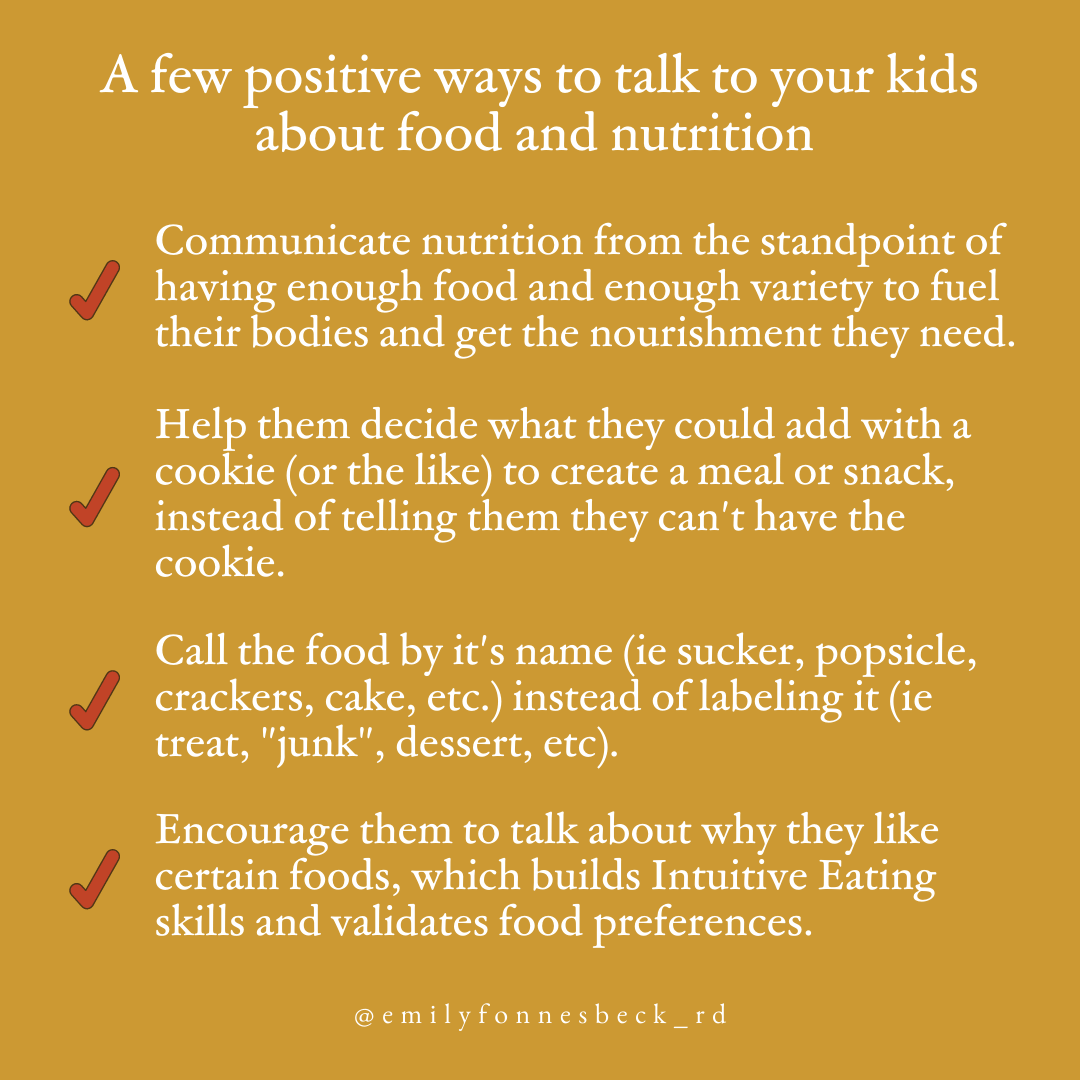
Communicate nutrition from the standpoint of having enough food and enough variety to fuel their bodies and get the nourishment they need.
“Healthy eating” is first and foremost about making sure you have enough to eat and that there’s enough variety to adequately fuel your body and get the nourishment you need. This truth should be foundational to everything you teach your kids about food, eating and self-care.
Unfortunately there are real issues with food insecurity and many kids do not have access to adequate quantities or quality of food. I want to acknowledge this issue as being real and important, and outside of the scope of what I can accomplish in this blogpost.
In the case that your kids do have adequate access to food, make sure you aren’t self-inflicting food scarcity on them. Make sure they know that they have ongoing, reliable access to food. You want them to grow up with the knowledge that self-care with food means having enough food to eat. That is the base on which they should build their nutrition knowledge. Getting fancy with food isn’t required for “healthy eating”, and won’t matter anyway unless they have enough to eat.
Help them decide what they could ADD to create a well-rounded meal or snack.
Let’s say your child is asking for a cookie (or the like) at a meal or snack. Instead of telling them they can’t have it, ask what they could add to make it a full meal or substantial snack. Brainstorm ideas with them, while avoiding putting pressure on them to choose certain things you think they should. Be open minded to where the conversation leads them!
Taking an addition approach (what to include) rather than a subtraction approach (what they can’t have) is a great way to model an all foods fit mentality. Variety and flexibility are important factors for getting adequate nutrition, so ADDING is a great skill to teach your kids.
Call the food by it’s name (ie sucker, popsicle, crackers, cake, etc) instead of labeling it (ie treat, “junk”, dessert, etc).
When you label food and put it in categories, you make it special and give it power. They learn that it’s forbidden, or at least not accessible, and that they have to earn it in some way. As soon as you create that dynamic, your child will fixate on it, figure out how to get it, sneak it, hide it, eat it in secret, lie in order to have it, etc.
You can actually avoid this fairly simply – call the food by it’s actual name and offer a wide variety of food at every meal and snack, including their favorite foods.
If, for example, they are asking for popsicles at dinner and you weren’t planning on serving them, you can simply tell them that: “popsicles aren’t on the menu for dinner but maybe we can have one with your snacks tomorrow”. Use these types of phrases in place of, “you know we don’t eat junk at dinner”.
Encourage them to talk about why they like certain foods, which builds Intuitive Eating skills and validates their food preferences. Why do they like eating ice cream? Have fun describing the experience of eating it.
Why do they like ice cream? Have them describe the experience of eating it to you. Maybe it’s cold and creamy. Maybe they love when it has chunks of chocolate chips. Maybe they have a specific type of flavor that they like. How does it feel in their mouth? Do they like it a little bit more melty or a little bit more solid? Do they like eating it in a cone or in a cup?
You aren’t grilling them on why they like something or making them tell you about it, you are causally discussing food preferences and having fun describing food experiences. This is meant to build Intuitive Eating skills, validate their food preferences and help them feel more connected to their food and their bodies.
It’s common for parents to think that their child is too preoccupied with food. They want their children to think and talk about food less. In reality, the more your kids are connected to their eating experiences, the better intuitive eaters they will be. By describing the experience of eating and describing what they are feeling as they eat, they are building Intuitive Eating skills that will come in no other way! I’ll bet you wish you’d had those kinds of connected and attuned eating experiences when you were a child. It’s never too late – this is a great exercise for anyone of any age to build Intuitive Eating skills.
I hope this was helpful! For more on feeding kids, you can check out my Raising Confident Eaters online course.
