
A few weeks ago on Instagram I posted a carousel on my feed that reframed the idea of “self-discipline”, and it seemed to resonate with a lot of people. To date it’s been shared 833 times, reposted 135 times, and has over 2,000 likes. Luckily, all the likes, shares, re-posts and comments have been positive.
I really love that it’s had the reach it deserves. The main idea I wanted to share is that self-discipline isn’t about fighting yourself.
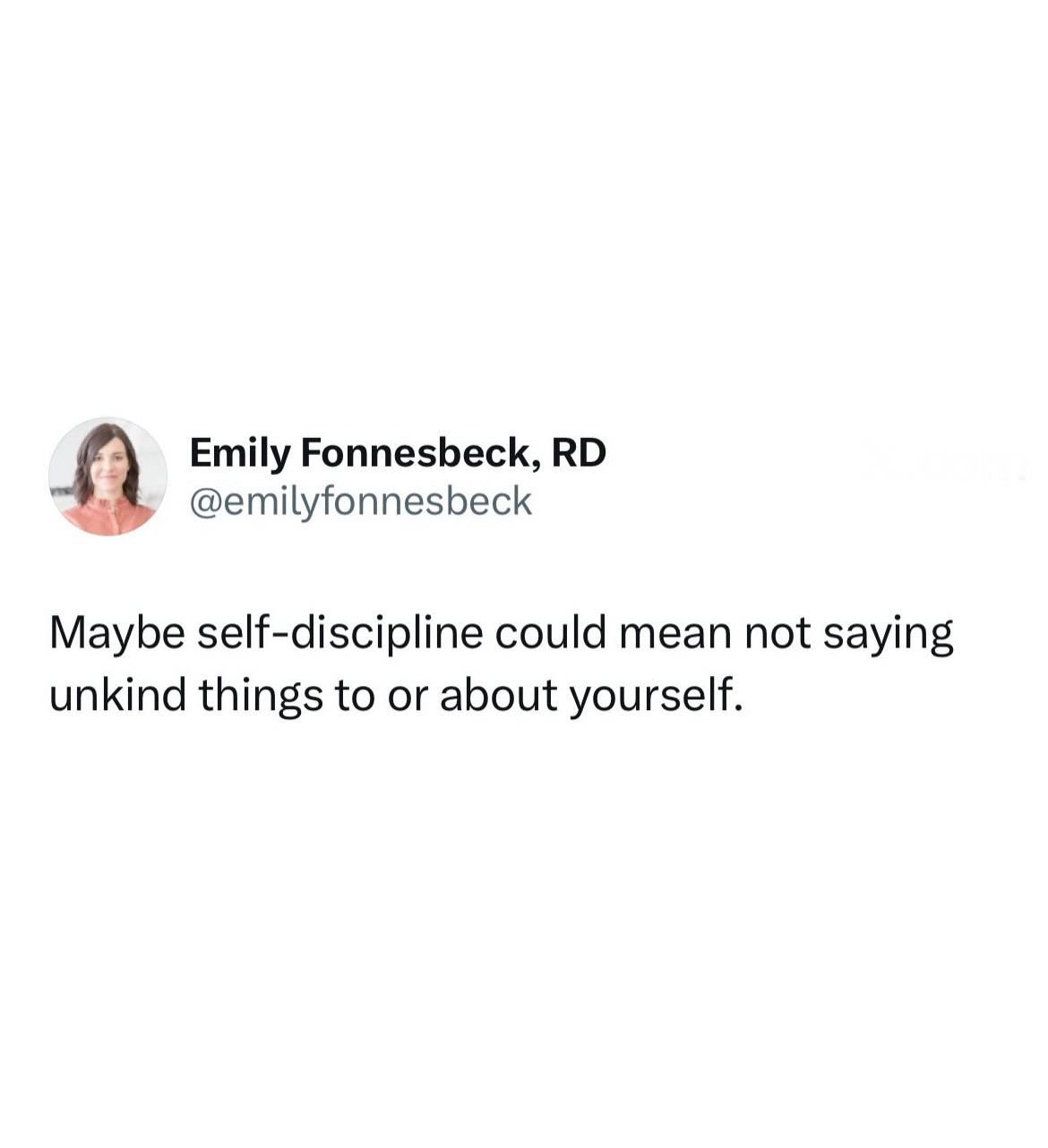
But that certainly isn’t always how it’s represented, right? Self-discipline is often weaponized and used as punishment; forcing yourself to workout when you’re body is screaming for rest, or skipping breakfast even though you’re hungry.
After doing some digging into how one would define self-discipline, I came up with this summary:
Self-discipline is the ability to control urges, and motivate yourself to take steps toward long-term goals, even though you currently may not feel like it. It’s the conscious choice to prioritize value based actions that you’ve decided on previously over what’s most comfortable right now. As you do so, you work to regulate thoughts and emotions rather than to make impulsive decisions.
I can see how easily anyone could take this to extremes, and that’s why I chose to reframe it. Because, in essence, I don’t really have any problem with the idea of self-discipline. It’s something we all naturally have and use to a certain extent, so why not make it work in our favor? I certainly think it’s best applied when balanced with a very healthy dose of self-awareness.
For me personally, I see self-discipline as a tool for protecting myself from things that don’t serve me, while intentionally engaging in things that do. This is where the self-awareness comes in; clearly I need to be aware of what those things are. If I’m not careful (not self-aware), I could be using self-discipline to do what other people do or tell me to do, making it more likely that I AM weaponizing self-discipline. I would suggest that far too many people are doing just that.
So if I’m aware that scrolling on social media drains my focus and creativity (it totally does), I want to control the urge to mindlessly scroll and motivate myself to use that time to work on the projects I’ve decided previously were important to me (but that require more focus and energy and sometimes feel kind of overwhelming). I may notice myself trying to avoid or dissociate, leading to the urge to scroll, so I’ll need to regulate and manage that instead of making decisions because of it. And I do all of this because I know I feel so much better when I do, and I make progress on things that really are so important to me.
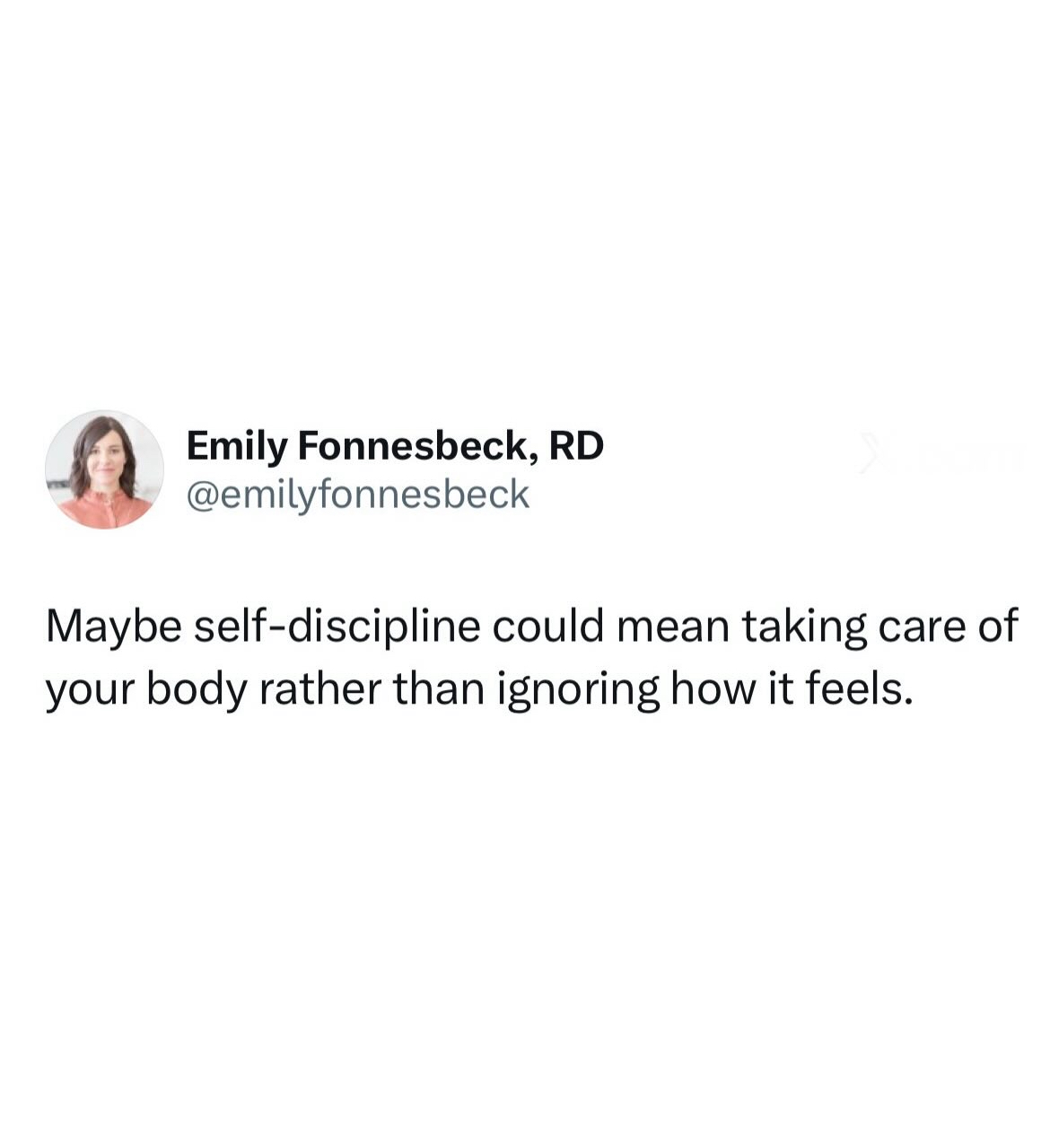
Let’s use a food example too. I know, from repeated experience, how essential it is for me to eat 3 substantial meals + snacks each day. It allows me to have the cognitive and physical resilience for all I want and need to do. It also helps me to fuel and recover from exercise, which is important to me. I sleep better, my digestion is better, and I am a lot more patient with the people I love. Essentially, eating at regular intervals throughout the day matters to me! I do not want to skip meals because I do not like the consequences that come.
So let’s say I’m running late one morning and I don’t have a lot of time to prep breakfast. I might be tempted to skip it or at least skimp on what I grab. But my current situation, thoughts or emotions aren’t the things I’d like to use to determine my choice in that moment. Instead, I want to remember and honor my commitment to eat full meals.
I’m using this example to highlight another really important attribute of healthy self-discipline: adaptability.
Maybe I don’t have time to make the breakfast I usually make, but that doesn’t mean I need to skip or skimp either. I can adapt, keeping my commitment to full meals and snacks each day, but opting for something quicker and even transportable. I don’t have time to make eggs, but I can throw together a yogurt bowl to bring in the car. I don’t have time to make oatmeal, but could make a PB&J and grab a banana and protein drink to go with it. I could even make a smoothie, which I’ve been known to do when I’m running late even though it’s probably the last thing I’d choose if I had more time. But eating (or drinking) something that I know will nourish me and provide sustainable energy can matter more to me in that moment. If not, I’m prone to all or nothing; have the ideal breakfast or none at all.
The examples I shared in my Instagram post are additional ways I practice self-discipline, and how my clients need to as well. I bet you’d benefit too.
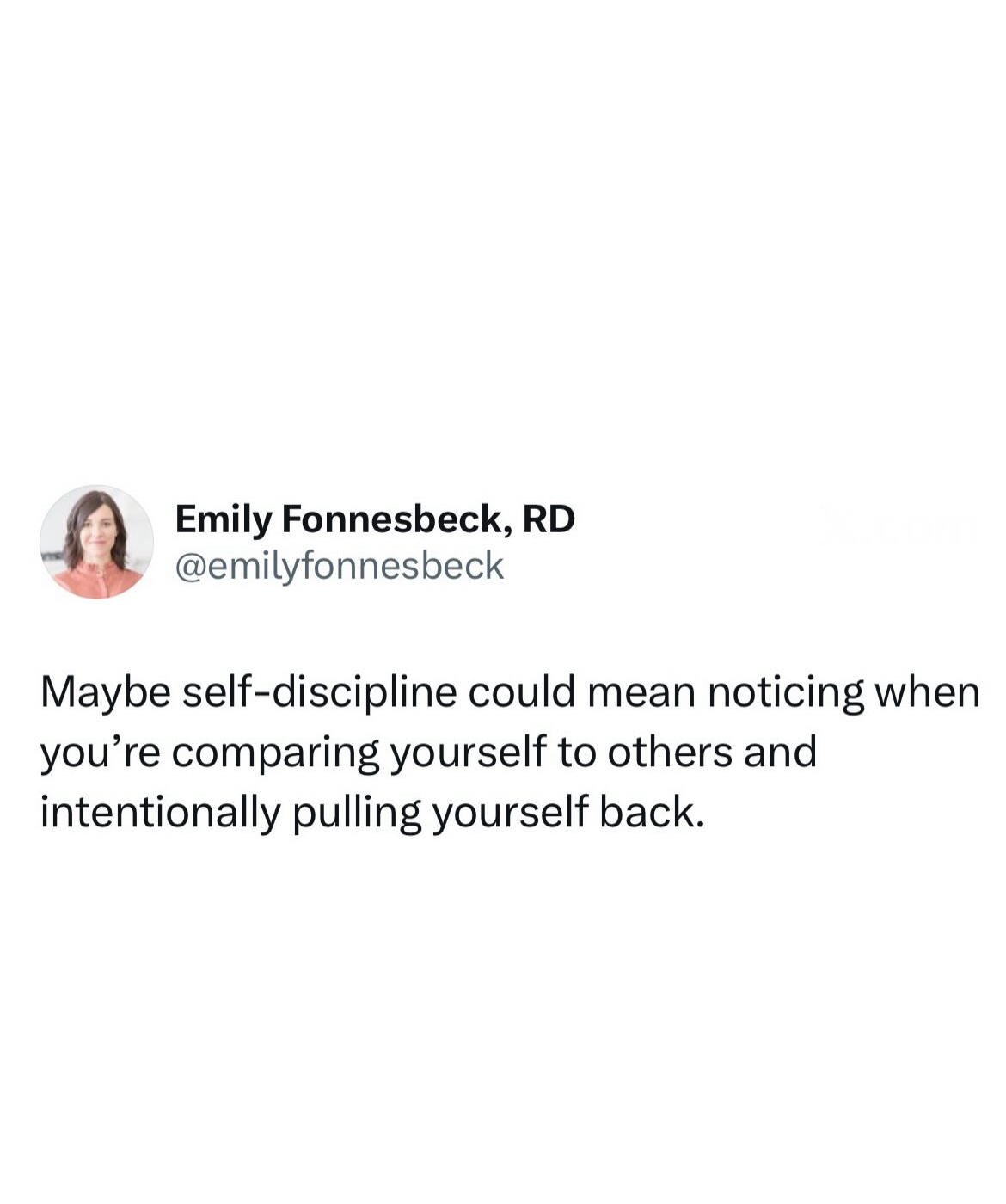
Maybe this comes naturally to you, but for many of us self-discipline has felt loaded and heavy and we run from anything that looks anything like it. That’s why this reframe is so important. We can reclaim what’s naturally ours from a culture that puts a lot of pressure on us to look, act, feel, move and eat a certain way. What if self-discipline could actually mean supporting and advocating for yourself, instead of fighting and manipulating yourself?
Perhaps you want to use a different word all together, but I think the idea is the same: healthy self-direction includes self-awareness, adaptability, and a commitment to yourself.